Worth a Million Words: How to Boost Your Blog with Great Video Content
September 2012
By Tara Hornor
So your company blog is perking right along. You’ve nailed the voice, tapped into a steady stream of ideas and inspiration and settled into a good rhythm of posting and extending your content through your various social media networks.
From here out, maintaining your momentum is as easy as lather, rinse, repeat, right? Au contraire. Now that you’ve mastered the basics, it’s time to shake things up and take on a new challenge: video content.
Why video? In today’s digital age, your followers’ brains are programmed to crave constant excitement and stimulation. Video content can engage them in different ways and offer a much more interactive experience that your standard text-based post.
Not convinced? Check out Wine Library TV, the video blog that helped Fame Foundry friend Gary Vaynerchuk skyrocket to success. On this vlog, Gary reviews wines:
It’s a straightforward concept, and he could just as easily write up his reviews as deliver them via video. But you can get stuffy, formal, written wine reviews just about anywhere. That wouldn’t be special. What makes Wine Library TV a destination point for his many thousands of loyal fans is seeing Gary V on camera in all his larger-than-life, in-your-face, uncorked, ad-lib glory.
Because video by its very nature is a more engaging medium, video-based content is also much more likely to be shared by your readers via social media. Furthermore, multimedia content gets huge points with Google. In fact, keyword searches on Google often include video posts in at least one of the top five results, making your keyword-enriched video much more visible to Web surfers.
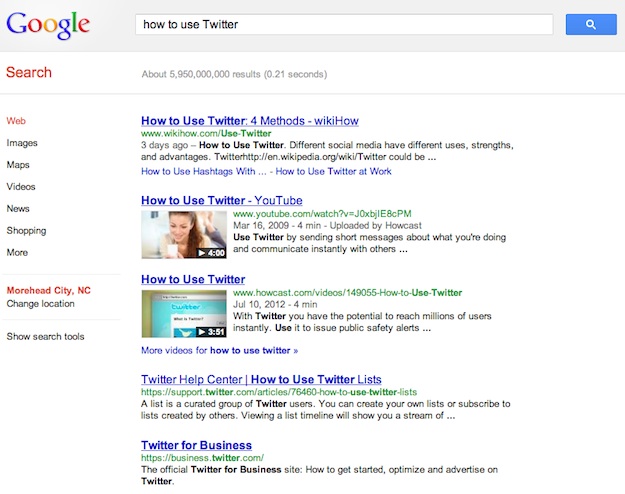
If you’ve never made a video before, the process can seem intimidating in its unfamiliarity. However, if you can master just three key elements – content, production and optimization – in no time, you’ll be publishing great video content that will take your blog to the next level.
Conquering video content
Content is king, so there’s no reason to tackle the technical aspects of producing a video for your blog until you’ve ironed out your video content strategy.
Don’t just produce a video for video’s sake. Your videos should be a natural evolution of your blog’s content that are highly relevant to your target audience.
As with any type of content that you’d publish to your blog, the number one rule is to provide value. Whether it comes in the form of information, entertainment or both, value is the one and only reason why someone will invest their time in watching your video and pass it along to others as well.
That being said, the medium opens the door to all types of fun, engaging, creative content that simply wouldn’t pack the same punch in written format. While the possibilities are nearly limitless, here are a just few basic ideas to get you started:
Reviews
As you can see from the Gary Vaynerchuk example, video is a great medium for delivering product reviews because your words seem more authentic when your audience can watch you manipulate the item and can witness your natural reactions.
Let’s say you own an athletic goods store. The next time Nike releases the latest version of one of its running shoes, give us a video review that demonstrates what’s new about that model and how it performs in action.
Tutorials
What’s a more effective way to teach your customers how to use your products: by explaining it through words in painstaking detail or by capturing your demonstration on camera?
On their blog, Brooklyn Kitchen publishes instructional videos that run the gamut from shucking oysters to cleaning a blade grinder to sabering a bottle of champagne.
These are the types of unique how-tos you can only get from a passionate group of foodies, and their readers place a high value on this level expertise.
Ask the expert
Speaking of expertise, get your customers in on the act by having them submit questions (whether by video, social media or good old-fashioned email) that you can answer on-camera as a voice of authority on the subject.
Series
When it comes to any kind of blog content, series are great because they automatically create anticipation for the next entry and give your followers incentive to come back time after time.
Let’s say you run a yoga studio. You could produce a series of video posts, each of which takes a specific pose and breaks it down in detail, demonstrating the proper form and the muscle groups that should be engaged when executed correctly.
Crowdsourced content
Are you camera shy? Then why not leave the work of creating your video posts up to your customers? YouTube is nothing if not a testament to how much we love to see ourselves on camera.
Challenge your customers to send in a video showing the creative ways they use your products. Or ask them to submit their own video reviews, which carry the added benefit of being great word-of-mouth marketing for your company.
Polishing the production
While it’s important for your videos to look professional, you don’t need the resources of a big-budget Hollywood blockbuster to produce great content for your blog. With a little practice, you can master the fundamentals of shooting, editing and publishing high-quality video content that will engage your followers.
Recording
There’s no need to break the bank, but do shoot in HD if you can. These days, the price difference between HD and non-HD cameras is minimal, and the improvement in quality is substantial.
The most important factor in recording, however, is stability. Use a tripod – whether real or improvised – to avoid the dreaded, motion-sickness-inducing Blair-Witch-Project shaky camera effect.
To avoid jarring transitions, don’t try to pan the camera to follow the action. Instead, film in one spot, move the camera, then film in that spot, and weave these scenes together later during the editing process.
If your video involves demonstrating something on your computer, use screen capture software such as HyperCam or CamStudio to yield the best quality end result.
Lighting and blocking
Natural lighting is always best, but even if you need to use artificial light, make sure that you’re not under- or over-lit.
If you wear glasses, remove them during the shoot, as reflection on the lenses will be distracting.
Before you dive in to filming, do a couple of quick test shots to make sure you’ve got it right before you waste a great take only to discover that your face is obscured in shadow or the top of your head is cut off.
Sound
The quality of sound in your video can make or break the viewer experience. If your voice is muffled or there’s too much background noise, your viewer will quickly get frustrated and move on.
A microphone is the easiest way to make sure that you can be heard clearly and distinctly. You don't have to use the latest greatest, but get something that will allow you to keep the mic close to you. Some people use a lapel mic, while others prefer shotgun mics and others use inexpensive mics that can be purchased at just about any department store. It's really up to you and your budget, but any mic is better than none at all.
Setting
Find somewhere to record your video that’s quiet and offers minimal background noise. And don’t forget to silence all of your various devices. A ringing phone or an email alert will ruin a great shot.
If possible, film your video against a solid backdrop to minimize visual distractions. You don’t want viewers to miss out on great information because they’re checking out all the knick-knacks on your desk and your walls.
Intro
Don’t risk tripping your viewers’ itchy browser-closing finger with a long, rambling introduction. Just tell us who you are and what your website is, then dive right into the substance of your video.
Editing
Your computer probably came with some basic editing software, so use that until your level of production savvy demands more sophisticated tools.
Keep in mind that it’s okay to leave good stuff on the cutting room floor. Inevitably, you’ll record more video than you use. You focus should be on capturing the essence of your story in about two to four minutes – the time-tested sweet spot for web video.
Publishing
To save bandwidth on your website, it’s best to upload your video to a sharing site like YouTube or Vimeo and then simply embed the video in your blog post from there.
This approach also has the added benefit of making your videos available to anyone who might be specifically searching one of these channels for content related to that subject matter.
For more great production tips, here a video from a blog owner who shares a few of the lessons he’s learned along the way:
Optimizing your videos
Just as with textual content, videos can be optimized for search engines through the use of keywords.
Choose a either a single keyword or keyword phrase to focus on, and incorporate this keyword in the title of your video, the URL, the tags and the text of the post where your video will live.
Google gives even more weight to text/video combos, so be sure to include your target keyword in text both before and after the video. For instance, start your post with a brief paragraph introducing your video, then embed the video and include a full transcript below, which coincidentally is also tremendously helpful for those who may have found your post but cannot view your video due to issues such as office firewalls.
Make sure as well to create a dedicated YouTube account for your blog that is linked to your website, and when you upload your video, use the same keywords in the title, description and tags that you used on your blog post.
Once you’ve published your video post, link to it and share it with your social media followers just as you would with your written posts.
By boldly venturing into the world of video content, you can help your blog rise above the competition and create a deeper level of engagement with your fans and followers. Over time, you’ll see the results of greater exposure and know that your learning curve and hard work have paid off.
Tara Hornor has a degree in English and has found her niche writing about marketing, advertising, branding, web and graphic design, and desktop publishing. She writes for PrintPlace.com, a company that offers color printing for business cards, printed catalogs, posters, brochures, custom postcards, and more printed marketing media. In addition to her writing career, Tara also enjoys spending time with her husband and two children. Connect with Tara on Twitter @TaraHornor.