We are the digital agency
crafting brand experiences
for the modern audience.
We are Fame Foundry.

See our work. Read the Fame Foundry magazine.

We love our clients.

Fame Foundry seeks out bold brands that wish to engage their public in sincere, evocative ways.


WorkWeb DesignSportsEvents

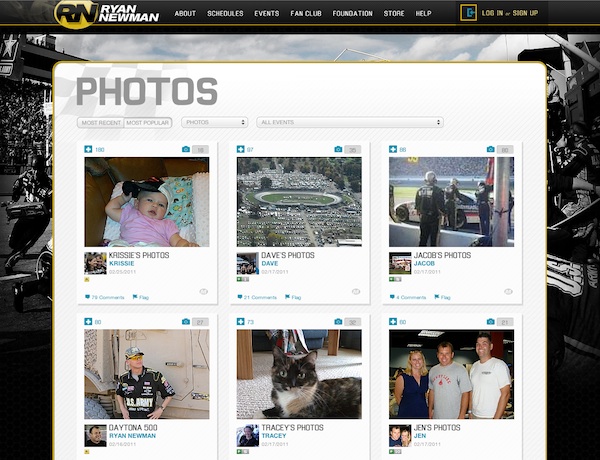
Platforms for racing in the 21st century.

Fame Foundry puts the racing experience in front of millions of fans, steering motorsports to the modern age.

“Fame Foundry created something never seen before, allowing members to interact in new ways and providing them a central location to call their own. It also provides more value to our sponsors than we have ever had before.”

—Ryan Newman

Technology on the track.

Providing more than just web software, our management systems enhance and reinforce a variety of services by different racing organizations which work to evolve the speed, efficiency, and safety measures, aiding their process from lab to checkered flag.

WorkWeb DesignRetail

Setting the pace across 44 states.

With over 1100 locations, thousands of products, and millions of transactions, Shoe Show creates a substantial retail footprint in shoe sales.

The sole of superior choice.

With over 1100 locations, thousands of products, and millions of transactions, Shoe Show creates a substantial retail footprint in shoe sales.

WorkWeb DesignRetail

The contemporary online pharmacy.

Medichest sets a new standard, bringing the boutique experience to the drug store.

Integrated & Automated Marketing System

All the extensive opportunities for public engagement are made easily definable and effortlessly automated.

Scheduled promotions, sales, and campaigns, all precisely targeted for specific demographics within the whole of the Medichest audience.

WorkWeb DesignSocial

Home Design & Decor Magazine offers readers superior content on designer home trends on any device.


  • By selectively curating the very best from their individual markets, each localized catalog comes to exhibit the trending, pertinent visual flavors specific to each region.


  • Beside the swaths of inspirational home photography spreads, Home Design & Decor provides exhaustive articles and advice by proven professionals in home design.


  • The art of home ingenuity always dances between the timeless and the experimental. The very best in these intersecting principles offer consistent sources of modern innovation.

WorkWeb DesignSocial

  • Post a need on behalf of yourself, a family member or your community group, whether you need volunteers or funds to support your cause.


  • Search by location, expertise and date, and connect with people in your very own community who need your time and talents.


  • Start your own Neighborhood or Group Page and create a virtual hub where you can connect and converse about the things that matter most to you.

775 Boost email open rates by 152 percent

Use your customers’ behavior to your advantage.

241 The 5 types of brand evangelists: The Crusader

The Crusader is the torchbearer for companies whose values and corporate culture inspire them.

774 Feelings are viral

Feelings are the key to fueling likes, comments and shares.

773 Don’t be so impressed by impressions

Ad impressions are a frequently cited metric in the world of online advertising. But do they really matter?

October 2014
By Jeremy Girard

Four Ways to Delight – Not Annoy – Visitors With the Element of Surprise

As Apple discovered with its recent U2 album giveaway, not every surprise is a welcome one. Here’s how to ensure that your efforts to wow your customers with unexpected value will leave them wanting more.
Read the article

Four Ways to Delight – Not Annoy – Visitors With the Element of Surprise

During its most recent keynote event, Apple announced that it had a surprise in store for their customers: every iTunes accountholder in 119 countries would receive a free copy of U2’s latest album “Songs of Innocence.” This giveaway translated into over half a billion albums given away, representing the largest release in history in a deal that is speculated to have cost Apple $100 million dollars. U2-AppleIt would be easy to assume that Apple’s customers would be thrilled by this generous gesture. While many certainly were, there was also a very vocal segment who were not so pleased to see this album suddenly appear in their music collection. Many of these naysayers took to social media to express their concerns, which were centered not as much on the album itself but rather on the way that its delivery had been handled. While Apple undoubtedly thought that they were providing a convenience by automatically pushing the album out to all iTunes accounts, in doing so, they took away the customer’s ability to choose whether or not they wanted to receive this gift. What was meant to be a nice surprise came across as an act of overstepping the bounds of privacy for some customers – definitely not what Apple was hoping for when they conceived this promotion. Employing the element of surprise in marketing and in web design is tricky business. When done right, it can delight your customers, but if handled incorrectly – as with the Apple giveaway – it has the potential to frustrate and alienate them instead. Let’s take a look at four ways to use the unexpected to make a favorable impression on your website visitors and leave them wanting more – and the pitfalls to avoid along the way.

Surprise! Here’s a free gift!

Freebies have long been a staple of marketing and promotion. From product sampling to contests to incentives for joining a mailing list or sharing contact information, they are an effective way to break the ice when building relationships with new customers. There’s nothing wrong with a good giveaway – as long as you obey the fundamental rule of trustcasting, recognizing that all promotional efforts must be founded first and foremost in building trust with your customers and website visitors. As we touched on above, the problem with Apple’s U2 album promotion had nothing to do with the giveaway itself but rather with its delivery. Permission is a key element of trust-based marketing, and Apple’s circumvention of the act of permission seeking was perceived as a violation of trust by some iTunes customers. A direct contrast to this is MailChimp’s free t-shirt promotion. When a new customer opens a paid account and sends their first email campaign, they receive a message of congratulations along with the offer of a free t-shirt. In order to receive the t-shirt, however, the customer must select the size they would like, thereby accepting the offer; the shirt doesn’t simply turn up unexpectedly in their mailbox. Mailchimp Of course, we have no way of knowing how many people actually decline this free gift, but regardless of whether it’s zero percent or fifty, the most important aspect is the respect for the customer demonstrated by the act of seeking permission. MailChimp allows the customer to maintain a sense of control over the transaction rather than removing that control the way that Apple did. As this comparison shows, permission is a make-or-break element between a surprise that delights and one that compromises trust and goodwill.

Surprise! You’ve got mail!

Email is definitely an area of online marketing that’s fraught with pitfalls. You can be a welcome presence in your customers’ inboxes, or you can be a nuisance that’s banished to the junk mail heap. One way to practically guarantee that you’ll end up in the latter category is by “surprising” your customers with a flood of emails that they did not expect to receive. Undoubtedly, you’ve experienced this scenario at some point: you make a purchase from a website or register for an account, and all of a sudden your inbox is overrun with promotional emails from that company trying to get you to come back to their site and buy, buy, buy. Make no mistake: the simple act of placing an order is not an invitation to unleash a deluge of spammy messages. Again, returning to the theme of permission, the first step to ensuring that your emails are welcome is by allowing your customers to explicitly request to receive them. A common way to accomplish this is by including a mailing list opt-in on your site’s checkout form accompanied by a message affirming that the customer wishes to receive updates with special offers and future promotions. In and of itself, this is a fine practice. If someone wants this information, allow them to receive it! The problem is that many companies have this option selected by default, and as a result, in their rush to complete their transaction, many customers will overlook this feature entirely and will unwittingly opt in to the series of emails that will follow. Again, this is an unpleasant surprise that does not contribute to improving the customer’s perception of your brand. If you are going to employ a mailing list opt-in checkbox anywhere on your site, make sure that it’s unchecked by default and that customers must actually see, read and make a conscious effort to elect to receive ongoing communication from you. Your mailing list won’t grow as quickly this way, but you will avoid surprising unwitting subscribers with emails that they did not expect or want. But obtaining permission to send these emails is only half the story. You also need to make sure that the content of your messages is designed to delight. Anything that is purely self-promotional in nature will be regarded as nothing more than an annoyance. You must use your carefully garnered inbox privileges to provide value to your customers – whether that comes in the form of special offers, fun promotions, reminders about upcoming events or just plain useful information. Your focus should be on crafting email campaigns that leave your customers looking forward to seeing what you’ll send next – not hitting the “spam” button as soon as it lands.

Surprise! Let’s watch a video!

Video content is a great way to engage with visitors to your website. As much as we writer types are loathe to admit it, people don’t like to read. They like to look at pretty pictures, and even more, they like to be entertained by videos. If you can create compelling videos – whether they demonstrate your products, offer helpful tips or are just flat-out amusing – your visitors will be delighted that you’ve gone the extra mile to give them the kind of content that they prefer rather than forcing them to wade through page after page of written text, and you’ll be head and shoulders above your competition. But there’s one important caveat to video content: never, ever, ever set your videos to auto-play on your site. Uncued audio, video, animations and pop-ups are completely taboo in modern website design, and if you use them, you’ll provide an unpleasant surprise that sends visitors scrambling for the back button to get away from this sensory onslaught. Don’t insult the intelligence of your visitors by forcing content upon them. It’s the online equivalent of having a pushy salesman pounce on them the minute they walk in the door and hound them into looking at products or services that may not be relevant to their interests at all. Instead, provide contextual clues on the page that indicate what your video is about, and allow your visitors to decide for themselves whether or not they wish to view it. This removes the element of unwelcome surprise without eliminating the value of the video content itself.

Surprise! We’ve made changes to our website!

Inevitably, there will come a time when it’s necessary to make changes to your website. These changes could be as minor as adding new types of products or services or as significant as a complete redesign. The problem comes when regular visitors return to your site expecting one thing (the site that they have become familiar and comfortable with) but receive something else instead (the new site). Of course, it goes without saying that any changes you make to your site should be driven by the objective of creating a better experience for your users. Make sure you carry this objective through to the launch of your new site or its new features by smoothing the transition for your regular visitors. After all, every website comes with an inherent learning curve. If you’ve done your job right, that learning curve should not be very steep; yet, it will still exist as visitors determine where they need to go and what they need to do to accomplish their goals. Therefore, when you make a change, you can ensure that it’s well received by visitors simply by alerting them to these changes and guiding them through the process of navigating them. One example of how to execute a re-launch right is Citizens Bank. Weeks before the release of their new site, they posted a message on their existing home page announcing that changes were ahead and signaling the date when the newly overhauled site would launch. They also offered a preview of the new site complete with an overview of new features and instructions for where to find commonly used tools. Did every customer see this message and take the tour? Of course not, but many did, and as a result, they were not taken aback by a jarring surprise on the day of the new site’s launch. Instead, they were already acclimated to the new features and functions, thereby maintaining a sense of certainty and control throughout the transition process. By demonstrating to their customers that their needs and desires were an important consideration in the bank’s plans for their new site, Citizens Bank was able to create a positive experience out of their redesign and avoid the potentially hazardous pitfall of forcing their customers to stumble unassisted through the process of re-learning how to use their site.

In summary

Going above and beyond to provide customers with unexpected value can be a powerful way to separate yourself from the competition, but if done incorrectly, it can also backfire in a big way. In the case of Apple, the company had to release a tool to allow customers to remove the free U2 album that they had been gifted – something they clearly did not foresee as necessary when they conceived the promotion. When you are considering how to implement the element of surprise in your marketing and website design plans, remember never to lose sight of your customers and their needs. Always ask their permission, keep the power in their hands and allow them to remain in control of the process as much as possible so that your surprise will be welcomed with delight and satisfaction.
April 2014
By Jeremy Girard

The Who, What, When, Why and How of Successful Email Marketing, Part II

Nailing these fundamentals will make the difference between a campaign that captivates and motivates versus one that is ignored and condemned to the trash folder.
Read the article

The Who, What, When, Why and How of Successful Email Marketing, Part II

email-marketing Email marketing: it’s not the newest, shiniest weapon in your business growth arsenal. But there’s no denying that it’s still a highly efficient and cost-effective way of communicating with your existing customers as well as new prospects. But don’t let the low barrier to entry lull you into a false sense of security. There are certain fundamentals you must follow if you want to create a campaign that captivates and motivates versus one that is ignored and condemned to the trash folder. In part one of this series (http://www.famefoundry.com/11041/the-who-what-when-why-and-how-of-successful-email-marketing-part-i/), we examined the quality of the recipients to whom our campaigns are sent and solidified a strategy for when and why to send them to ensure that we do not overwhelm those recipients with messages that are unimportant or unnecessary. Now, we’ll turn our focus to the remaining two fundamentals of email marketing success: what we will say and how that message will be delivered.

The How

No matter which email marketing platform you use to create and send your campaign, all include templates that provide designated areas for content that can be easily edited. The issue with these templates, of course, is that they are, well, templates. As a result, when you use them, you run the risk that your emails will look nearly identical to others that your customers receive, and simply adding your logo is not enough to create real differentiation. As a result, used as-is, they can make your marketing campaigns look cheap and unprofessional. This is why customization is a must. All of these email templates are built with HTML, the same programming language used to construct websites. Behind the scenes are code and images that can be edited to create a more custom-tailored look and feel. Due to the highly technical nature of making modifications within the HTML code, this is probably not something you should DIY but rather entrust to your web development team. They can shape and refine these pre-existing templates or even create a completely unique template design from scratch that integrates seamlessly with all elements of your brand’s visual identity (i.e., your website, printed materials, etc.) and sets you apart your competitors. Whichever approach you choose, this represents a relatively small one-time investment that will pay great long-term dividends as you use your branded templates time and time again. Ideally, you’ll want to establish a few different email layouts that can be used for various purposes, such as newsletter-style content, major announcements and perhaps service alerts or other time-sensitive notifications. The template formats you require will of course depend on your business needs, but by having a few on-hand to choose from, you can ensure all of the email communication that you send reflects well upon your brand.

The What

Subject, subject, subject

No matter how beautifully designed your email might be, that design isn’t worth the pixels it’s transmitted on if your message goes straight to the trash unread. Your subject line is the make-or-break factor that will determine whether the recipient will grant you even just a few seconds of their precious time and attention. A line that’s boring and unimaginative provides zero motivation for them to give your message a second glance. One that’s too over-the-top screams “SPAM!” and is just as likely to be ignored. Subject lines that are too long, written in ALL CAPS, filled with exclamation marks or intentionally deceitful (e.g., including “Re:” to make the email appear as if it’s a direct reply to a message from the recipient) are guaranteed to work against you, so avoid them at all costs. Effective subject lines are neither vague nor dull. If you received an email with the nondescript subject line “News Update,” would you read it? Neither will your customers. Similarly, the subject line “April Customer Newsletter” explains what the email itself is, but it offers no insight into the content of its message. For my own company’s email newsletters, we have eschewed these types of easily disregarded subject lines in favor of more descriptive ones that tease the content. In doing so, we have achieved much better open rates. One way to boost the success of your subject line is to frame it in the form of a question, such as “Are you considering a move to the cloud for your business?” or “Do you know the reasons companies usually struggle with a move to the cloud?” Those two subject lines are ones I actually tried recently along with a more straightforward one – “Challenges of Moving Your Business to the Cloud”. While all three saw relatively good open rates, the two that posed a question to the recipient well outperformed the other. Start paying attention to the emails that land in your own inbox. Which subject lines catch your eye? Which do you gloss over without a second thought, and which ones prompt you to hit the “delete” button immediately? Soon you’ll begin to discern which types of lines are most effective, and you can apply these techniques to your own campaigns.

Inform, don’t overwhelm

Now that you’ve formulated an attention-grabbing subject line that will motivate your recipient to open your email, the next challenge you must conquer is the content of the email itself. All too often, companies try to communicate too much via their emails, with the end result being that the recipient is too overwhelmed to fully process and take action on the information being conveyed. Many email newsletters fall into this trap, with company announcements, blog articles, product highlights and more crammed into a single message. In an attempt to make sure the recipient has access to every piece of information that could possibly be of value to them, the e-newsletter becomes a scattered mess that lacks organization and direction. Additionally, this information is usually presented in full within the body of the message itself, instead of prompting the reader to click a link to access the full text via a web page. As a result, the number of ideas coupled with the depth of their presentation spells doom for the campaign. A quick scan of the message is enough to turn the recipient away because they have no desire to invest the time necessary to sort though the barrage of content to find the one or two bits of information that might be of use to them.

Be a tease

Avoid this “much too much” trap by editing and teasing your content. Include no more than three key ideas per newsletter. Sure, you may have more than three things to say, but you must be ruthless in your selection process, and save the rest for another missive or another medium. Next, present those three (at most!) ideas in the form of short teasers. A title, a short intro to the news item or article being highlighted and an accompanying image are all you need to pique your reader’s interest – along with a link prompting them to read more on your company’s website. By doing so, you’ll ensure that your email newsletter offers a clean, visually appealing presentation that can be scanned and processed in a matter of mere seconds. If a reader is interested in one of the three key ideas you’ve presented, they have the option to easily obtain more details for themselves. Of course, this approach has the added benefit of driving users to your website and increasing that site’s exposure to new audiences. When I suggest this “click to read more” approach, the reaction I most often receive is that readers “don’t like to click a link” but rather want to read the article in their email message. I have no idea where this belief came from, but it is false. Users are more than comfortable with clicking links, especially if it comes from a trusted source (see Part I for the benefits of using a carefully curated email list of customers who know who you are already). The Internet is driven by clicks, so do not be afraid to embrace this behavior! By mastering these five fundamentals of successful email marketing – the who, what, when, why and how – you can help to ensure that your messages are a welcome presence in your recipients’ inboxes, that they are read and, most importantly, that they motivate your customers and prospects to take the action you desire.