10 Things You Pay for From Traditional Marketing Agencies
January 2010
By The Architect

In today’s business world, it’s no longer the big fish that eats the small fish; it’s the fast fish that eats the slow fish.
In the same way the information revolution has changed how customers and market share are won, it has also reshaped the old systems that once governed how companies operate and how people work. The future of business is more flexible, faster, leaner and smarter.
This is not just about adopting a telecommuting policy or forgoing the purchase of that expensive copier. It’s about changing how business is done, both in philosophy and in execution.
The penalty of clinging to old business practices is losing clients that no longer can justify bills with unneeded overhead baked into them. As leaner and smarter companies emerge, the old juggernauts who are slow to change are quickly dying.
Marketing agencies
At the top of the scale of corporate bloat are marketing and advertising agencies. While not all industries can shed their physical offices and adopt a virtual model, the dominance of digital marketing coupled with the very nature of marketing’s day-to-day business operations afford these agencies a clear-cut path to modern efficiency.
However, in reality, few have changed. The majority of marketing firms hang on to these old systems of operations, passing on the burden of their expenses to their clients.
The traditional marketing firm still maintains an expensive posture to attract its clients.Why? Most find changing their methods of operations to be just as hard as adapting to today’s Web culture and the new rules of doing business. Too much has changed too quickly. In clinging to old methods – even those of its own self-promotion – the traditional marketing firm still maintains an expensive posture to attract its clients with their lavish offices and costly travel. These companies force work into physical locations, perpetuating the punching of clocks and shuffling of paper, while carrying years of old business operations in the form of debt, all of which must ultimately be paid for by the client.
There’s a reason why marketing companies are dying left and right, beyond becoming irrelevant in the digital age. Today's clients no longer accept invoices inflated by bloated operations, particularly when virtual companies can do more at a fraction of the cost.
The rise of the virtual company
It took time for companies like Amazon, Netflix and Apple to revolutionize and overtake industries that were once based in bricks and mortar. Replacing the physical form was a challenge in reconditioning the mind of the consumer and in reshaping traditional systems, such as fulfillment, customer service and exception handling.
2010 will see the emergence of the virtual company in full force.These initial obstacles were quickly overcome as consumers realized the advantage of lower prices by way of lower overhead, mutually beneficial partnerships and geographical barriers being torn down and giving way to an expanded market. Today, that same virtual model that started strong in the retail sector is being adopted throughout all applicable industries. As a result, virtual companies are growing at record pace.
2010 will see the emergence of the virtual company in full force. The convergence of technology, communication, new service-based companies and systems that meet the demands of companies that no longer carry the burden of bloated operations will allow more companies to work smarter, faster and from anywhere.
As virtual companies continue to refine their systems and clients continue to realize the value in receiving better service for less money, the virtual company will gain strength and overtake the outmoded traditional business models. This not only improves efficiencies but tears down geographical barriers to markets and talent.
As we enter the age of the virtual company, let’s review ten things you pay for from traditional marketing agencies:
1. Facilities

Office space is typically the largest expense on the books for marketing agencies. These obligations range from rented space in a shared office park to owning (and owing for) real estate, freestanding buildings and parking facilities.
Virtual marketing companies shed this expense because the nature of the business simply doesn’t require it anymore. Marketing is digital, and print is dying. All the infrastructure that was once housed in a physical location is now replaced by a range of new digital services. Communication is conducted through e-mail, mobile devices, video conferencing and client dashboards rather than on-site meetings and client lunches, the costs of which are ultimately passed back to the client.
The marketplace demands geographic barriers be removed to hire, collaborate and partner with the best talent in the industry. The virtual company’s employees work remotely within a virtual space that accomplishes anything that a physical location provides and more. They are mobile and available at a moment’s notice to meet with clients. Even remote offices, meeting spaces and presentation rooms can be rented by the day or hour, as needed, so as not to waste money on a fixed building that sits there to house all the bloated systems and conventions the traditional marketing company clings to.
2. On-site employees and physical work systems

For many office-based companies, the days of having people gathered in a building to work is gone. For these businesses, the act of keeping people around was just another form of time card punching, rooted in old systems founded on the demand for people to be present and available to coworkers and customers from 9 to 5.
Happy employees do better work, particularly the ones responsible for great creative work.Virtual companies don’t operate according to fixed 9-to-5 schedules. Instead, their systems and employees are faster, more flexible, working within tighter deadlines and using new, more robust project management conventions.
Telecommuting is more prevalent today than ever, for reasons that go beyond avoiding the cost of expensive office space. Happy employees are ones that are not trapped in cubicles, hustling through traffic, burning 30-40 hours and hundreds of dollars a month in commuting to a fixed place to do work that can be done anywhere. The fact is, happy employees do better work, particularly the ones responsible for great creative work.
Moreover, work systems based on having everyone in a centralized office all day are terribly inefficient. To see this, you have to look beyond hard costs and expenditures and consider the man hours wasted on meetings, scheduling, water cooler talk, Web surfing – the list goes on and on.
Replacing the physical office environment are proven virtual office management and collaboration systems like Basecamp, video conferencing, cloud computing and mobile Internet connectivity. Most importantly, the philosophy behind the work is based on maximizing project development efficiencies rather than filling up a 40-hour work week simply for the sake of adhering to convention.
3. Utilities

From security systems, electricity, heating and A/C to cleaning and facility repairs, the auxiliary costs of maintaining a facility can be extraordinary. This is an expense that virtual companies leave behind and don’t pass on to their clients.
4. Landline phone systems

In an age where business is a 24-hour, anywhere and everywhere proposition, corporate phone systems are an enormous waste. Everyone has a cell phone, and most working professionals carry smartphones. For many, the superfluous office phone collects dust, and voicemail systems are rarely used. In a time when most households are shedding the costs of landlines in favor of more flexible and leaner mobile options, many businesses still lag behind.
Agencies that continue to operate from a physical facility must pay to maintain and upgrade expensive landline systems, adding yet more extraneous dollars per hour to their clients’ bills.
5. Office furnishings

Expensive offices, conference room tables, desks, chairs, bathrooms, kitchens, interior decoration and even trophy cases displaying purchased accolades are omitted from the overhead costs of all virtual companies.
6. Computing infrastructure and LANs

So many companies still keep gobs of file and printer servers along with data backup systems, server redundancies, uninterrupted power supplies, routers, switches, cabling, internal e-mail systems – the list goes on.
For virtual companies, the idea of a LAN (local area network) has been replaced by cloud computing, with Web-based service providers, project management, collaboration systems, and applications. These systems are accessible from anywhere in the world, offer true collaboration with anyone and are always backed up and protected.
What’s more, project management in the virtual space allows for new and innovative work habits that promote speed, efficiency and flexibility in ways old companies employing old work systems simply cannot keep pace with.
7. Paper
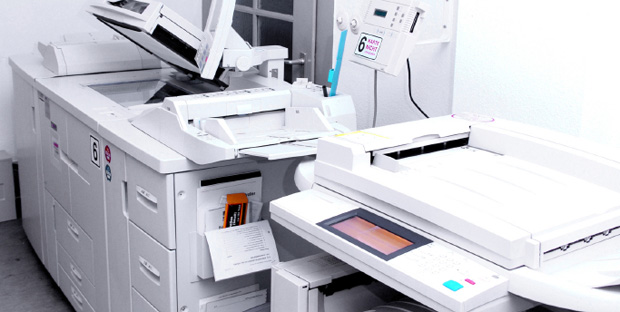
So many of the slow, dying companies we see today still live in an office with paper circulating all the time. Believe it or not, nowhere is this more true than at your local marketing agency. Also included in this paper-filled world are printers, copiers, fax machines, shredders and a never-ending variety of supplies, all in support of paper trails that lead from the office to the client and back again before ending in nicely climate-controlled filing cabinets.
Virtual companies exist in a paperless world, and the best work circles around those that stay in a paper-driven office. The benefits of going (and staying) completely digital are immense. Digital documents are searchable, sharable, versioned, more secure and viewable on nearly any device. The more files that are kept, used and cataloged in digital format, the more efficiencies will increase overall.
8. Support staff and personnel

When agencies pay for an office, furnishings, phone systems, computing infrastructure and everything in between, they also require additional personnel, time and resources to support those systems, including office managers, receptionists, IT staff, cleaning crews, landscapers and security, to name a few. Thus, these already excessive expenses are further exacerbated and passed on to the client.
9. Restricted geographical barriers

If there’s one thing the Internet has brought to the economy, it’s the expanded marketplace. The business systems of virtual companies are not only set up to take on clients without most of the additional expenses suffered by traditional companies but to hire the best talent available anywhere.
Truth is, many marketing agencies are restricted to their local markets. While these firms would in theory jump on a plane to take on a client nearly anywhere, most find in practice that only local clients are cost-effective given the traditional systems still employed.
10. Debt

The result of all of this expense in a world that is quickly shifting to leaner and smarter operations is that this much of the excess is carried forward in debt that comes at a premium paid to a bank in interest. That ongoing obligation is passed to clients along with the cost of all other inefficiencies.
Virtual companies that start fresh, using smart, lean and flexible systems of operation don’t carry years of bad investments in outmoded, expensive systems on their backs. In fact, as traditional marketing agencies continue to lose clients and market share to these more adept modern firms, the additional debt taken on to stay alive will eventually lead to the extinction of the slow, bloated traditional marketing company as we know it.
photos: Flickr: Christ0ff, chrisdlugosz
Behind every superstar website there is an architect, scrutinizing every single detail, cutting through the nonsense, and challenging every aspect to craft a masterpiece that gets noticed and gets results.