We are the digital agency
crafting brand experiences
for the modern audience.
We are Fame Foundry.

See our work. Read the Fame Foundry magazine.

We love our clients.

Fame Foundry seeks out bold brands that wish to engage their public in sincere, evocative ways.


WorkWeb DesignSportsEvents

Platforms for racing in the 21st century.

Fame Foundry puts the racing experience in front of millions of fans, steering motorsports to the modern age.

“Fame Foundry created something never seen before, allowing members to interact in new ways and providing them a central location to call their own. It also provides more value to our sponsors than we have ever had before.”

—Ryan Newman

Technology on the track.

Providing more than just web software, our management systems enhance and reinforce a variety of services by different racing organizations which work to evolve the speed, efficiency, and safety measures, aiding their process from lab to checkered flag.

WorkWeb DesignRetail

Setting the pace across 44 states.

With over 1100 locations, thousands of products, and millions of transactions, Shoe Show creates a substantial retail footprint in shoe sales.

The sole of superior choice.

With over 1100 locations, thousands of products, and millions of transactions, Shoe Show creates a substantial retail footprint in shoe sales.

WorkWeb DesignRetail

The contemporary online pharmacy.

Medichest sets a new standard, bringing the boutique experience to the drug store.

Integrated & Automated Marketing System

All the extensive opportunities for public engagement are made easily definable and effortlessly automated.

Scheduled promotions, sales, and campaigns, all precisely targeted for specific demographics within the whole of the Medichest audience.

WorkWeb DesignSocial

Home Design & Decor Magazine offers readers superior content on designer home trends on any device.


  • By selectively curating the very best from their individual markets, each localized catalog comes to exhibit the trending, pertinent visual flavors specific to each region.


  • Beside the swaths of inspirational home photography spreads, Home Design & Decor provides exhaustive articles and advice by proven professionals in home design.


  • The art of home ingenuity always dances between the timeless and the experimental. The very best in these intersecting principles offer consistent sources of modern innovation.

WorkWeb DesignSocial

  • Post a need on behalf of yourself, a family member or your community group, whether you need volunteers or funds to support your cause.


  • Search by location, expertise and date, and connect with people in your very own community who need your time and talents.


  • Start your own Neighborhood or Group Page and create a virtual hub where you can connect and converse about the things that matter most to you.

December 2016
By Kimberly Barnes

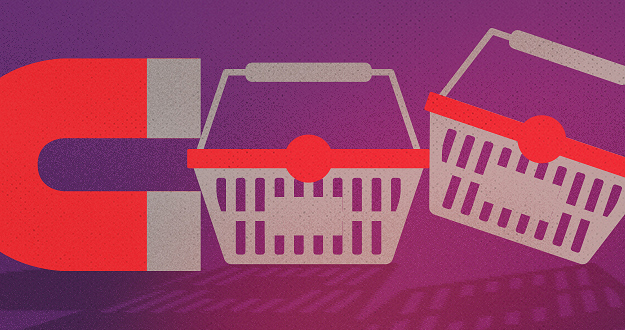
Going the Distance: Four Ways to Build a Better Customer Loyalty Program for Your Brand

Loyalty programs are no longer a novelty. That means that yesterday’s strategies won’t work moving forward, so look for ways to rise above the noise, setting yourself apart from the cloying drone of countless other cookie-cutter programs.
Read the article

Going the Distance: Four Ways to Build a Better Customer Loyalty Program for Your Brand

article-thedistance-lg It’s easy enough for a customer to join your loyalty program, especially when you’re offering an incentive such as discounts. All your customer has to do is give out some basic information, and voila! They’re in the fold, a brand new loyalty member with your company. From there, it’s happily ever after. You offer the perks; they stand solidly by you, bringing you their continued business. Simple. Or is it? In reality, just how many of those customers are act ively participating in your loyalty program? Do you know? Sure, loyalty program memberships are on the rise according to market research company eMarketer, having jumped 25 percent in the space of just two years. However, that figure may be a bit misleading. The truth is that, while loyalty program sign-ups may be more numerous, active participation in such programs is actually in decline. At the time of the study, the average US household had memberships in 29 loyalty programs; yet consumers were only active in 12 of those. That’s just 41 percent. And even that meager figure represents a drop of 2 percentage points per year over each of the preceding four years, according to a study by loyalty-marketing research company COLLOQUY.

When discounts just aren’t enough

So what’s a brand to do? How can you make your loyalty program worth your customer’s while—as well as your own? After all, gaining a new loyalty member doesn’t mean much if your customer isn’t actively participating in your program. Consider this: Does your customer loyalty program offer members anything different from what your competitors are offering? Chances are your program includes discounts. That’s a given. And what customer doesn’t appreciate a good discount? But when every other company out there is providing this staple benefit in comparable amounts, it becomes less and less likely that customers will remain loyal to any one particular brand. Frankly, it’s all too easy for customers to get lost in a sea of loyalty member discounts. They’re everywhere. In fact, just under half of internet users perceive that all rewards programs are alike, according to a 2015 eMarketer survey. The key to success, then, is to differentiate your business from the crowd. If you can offer your customers something unique and valuable beyond the usual discount, chances are they’ll be more likely to stick with your brand. Here’s some inspiration from companies who get it.

Virgin: Reward more purchases with more benefits.

That’s not to say you need to get rid of discounts entirely. In fact, nothing could be further from the truth. Customers still love a good discount. The goal is to be creative in terms of the loyalty perks you offer. Take the Virgin Atlantic Flying Club, for example. As part of its loyalty program, the airline allows members to earn miles and tier points. Members are inducted at the Club Red tier, from which they can move up to Club Silver and then Club Gold. Here, it’s not just a discount. It’s status. And people respond to feeling important, elite. Still, even where the rewards themselves are concerned, Virgin is motivating loyalty customers with some pretty attractive offers. At the Club Red tier, members earn flight miles and receive discounts on rental cars, airport parking, hotels and holiday flights. But as members rise in tiers, they get even more. At the Club Silver tier, members earn 50 percent more points on flights, access to expedited check-in, and priority standby seating. And once they reach the top, Club Gold members receive double miles, priority boarding and access to exclusive clubhouses where they can get a drink or a massage before their flight. Now that’s some serious incentive to keep coming back for more. Discounts are still part of the equation – but they are designed with innovation and personal value in mind, elevating them to more than just savings.

Amazon Prime: Pay upfront and become a VIP.

What if your customers only had to pay a one-time upfront fee to get a year’s worth of substantial benefits? It may not sound like the smartest business idea at first glance. But take a closer look. Amazon Prime users pay a nominal $99 a year to gain free, two-day shipping on millions of products with no minimum purchase. And that’s just one benefit of going Prime. It’s true that Amazon loses $1-2 billion a year on Prime. This comes as no surprise given the incredible value the program offers. But get this: Amazon makes up for its losses in markedly higher transaction frequency. Specifically, Prime members spend an average of $1,500 a year on Amazon.com, compared with $625 spent by non-Prime users, a ccording to a 2015 report from Consumer Intelligence Research Partners.

Patagonia: Cater to customer values.

Sometimes, the draw for consumers isn’t saving money or getting a great deal. The eco-friendly outdoor clothing company Patagonia figured this out back in 2011, when it partnered with eBay to launch its Common Threads Initiative: a program that allows customers to resell their used Patagonia clothing via the company’s website. Why is this program important to customers? And how does it benefit Patagonia? The company’s brand embraces environmental and social responsibility, so it was only fitting that they create a platform for essentially recycling old clothing rather than merely throwing it away. The Common Threads Initiative helps Patagonia build a memorable brand and fierce loyalty by offering its customers a cause that aligns with deep personal values. OK, so their customers get to make a little money, too. Everybody wins.

American Airlines: Gamify your loyalty program.

If you’re going to offer your customers a loyalty program, why not make it f un? After all, engagement is key to building a strong relationship with your customer. And what better way to achieve that goal than making a game of it. American Airlines had this very thing in mind when it created its AAdvantage Passport Challenge following its merger with USAirways. The goal: find a new way to engage customers as big changes were underway. Using a custom Facebook application, American Airlines created a virtual passport to increase brand awareness while offering members a chance to earn bonus points. Customers earned these rewards through a variety of game-like activities, from answering trivia questions to tracking travel through a personalized dashboard. In the end, participants earned more than 70 percent more stamps than expected – and the airline saw a ROI of more than 500 percent. The takeaway: people like games.

Stand out from the crowd.

Your approach to your customer loyalty program should align with your overall marketing approach. Effective branding is about standing out, not blending it. Being memorable is key. To this end, keep in mind that loyalty programs are no longer a novelty. That means that yesterday’s strategies won’t work moving forward, so look for ways to rise above the noise, setting yourself apart from the cloying drone of countless other cookie-cutter programs.


528 It's a snap! 5 easy ways to click with customers on Instagram

With 80 million users and growing, it's clear that Instagram is one social media platform you can’t afford to ignore,

June 2021
Noted By Joe Bauldoff

The Making and Maintenance of our Open Source Infrastructure

In this video, Nadia Eghbal, author of “Working in Public”, discusses the potential of open source developer communities, and looks for ways to reframe the significance of software stewardship in light of how the march of time constantly and inevitably works to pull these valuable resources back into entropy and obsolescence. Presented by the Long Now Foundation.
Watch on YouTube

March 2021
Noted By Joe Bauldoff

The Case for Object-Centered Sociality

In what might be the inceptive, albeit older article on the subject, Finnish entrepreneur and sociologist, Jyri Engeström, introduces the theory of object-centered sociality: how “objects of affinity” are what truly bring people to connect. What lies between the lines here, however, is a budding perspective regarding how organizations might better propagate their ideas by shaping them as or attaching them to attractive, memorable social objects.
Read the Article

February 2014
By Jeremy Girard

Deal-Breakers and Dead-Ends: Six Turn-Offs That Alienate Website Visitors

These glaring missteps will repel a potential new customer faster than a cheesy pick-up line and cheap cologne.
Read the article

Deal-Breakers and Dead-Ends: Six Turn-Offs That Alienate Website Visitors

Without question, the task of driving new visitors to your company’s website is not easy. Success requires serious strategic planning and a significant investment of resources, from content marketing and social media promotion to search engine advertising and offline marketing initiatives. So once those hard-won visitors arrive, why in the world would you immediately turn them away? Well, you certainly wouldn’t do so intentionally, but there may be deal-breakers and dead-ends lurking within your site that will repel a potential new customer faster than a cheesy pick-up line and cheap cologne. Here are six mood-killers that you must avoid if you hope to woo new customers, entice them to engage with your site and provide such a positive experience that they will tell all their friends what a great catch you are:

1. Download our app

If you’ve invested in creating an app for your brand, naturally you want to bring this to the attention of mobile visitors and encourage them to download it. But it’s all too easy to cross the line between promoting your app and perturbing your customer. Recently, I was in the process of working on an email marketing campaign using the popular service Constant Contact. I found myself with a spare moment between meetings, so I grabbed my iPad and set out to make a few quick edits to my draft. When I logged into the site and selected the email I wanted to edit, I was greeted with a message asking me if I wanted to download “QuickView”, their app for iPad and iPhone. ConstantContact But I was in a rush and had no interest in downloading and figuring out how to use their app to accomplish the simple task of making changes to an email I had already begun crafting. So I clicked “No, thanks” and was then returned to my list of emails. Once again, I clicked the email that I wanted to edit – and once again I was greeted with the prompt to download the app. I was stuck in a loop of non-productivity. Unless I installed the app, I could not complete my desired action on my iPad. By any standard, this was a very poor user experience. Unfortunately, this is not an unusual scenario. If you browse the Web on your mobile device with regularity, you’ve undoubtedly encountered this type of “Download our app!” a number of times. However, the problem arises when downloading an app is the only viable way to interface with a site via a mobile device and the objective of providing a good user experience is sacrificed in the interest of securing a permanent spot in the user’s pocket. Instead of trying to force your app on mobile visitors, take a more subtle approach. For example, displaying a small banner at the top of your site’s mobile view is a great way to make users aware of your app without disrupting their workflow or compromising the quality of their experience. Never, ever require your visitors to download an app to use your site; rather show them the respect of allowing them to interact with your brand in the way that they most prefer, whether that’s through a browser or through your app.

2. Give us your digits

We get it. When a new visitor comes to your website, you want to capture as much information about them as quickly as possible so that you can continue your engagement with them long after they’ve moved on to other corners of the Web. With this motivation in mind, there are many sites that immediately greet new visitors with a pop-up-style message. Instead of seeing the expected home page content, the user is presented with a request to complete a form to provide their contact information in exchange for a welcome discount offer or to follow the company on Facebook for future updates and promotions. Either way, these pop-ups are very disruptive to the user experience and provide obstacles that only make it more difficult for the visitor to accomplish what they originally came to the site to do. Invision Think about this experience for a moment. Yes, it would be ideal if every visitor to your site would willingly complete a short form that gives you invaluable data. But in reality, no one comes to your site for the express purpose of helping you market to them, so by giving such a message top priority, you are telling them that your needs are more important than theirs. That’s a pretty poor way to start the conversation. This phenomenon is so pervasive that there is even an entire website – tabcloseddidntread.com – dedicated to these types of interruptive messages. While the writing on the site is a bit snarky, the point it makes is a valid one: these messages create a poor user experience from the outset. As a result, any value you might gain in collecting user data is quickly negated if that user has no interest in continuing their engagement with you because you’ve created such a negative first encounter. Instead of leading off the conversation with your survey request, Facebook follow prompt or current promotion, simply allow your visitors to dive right into the site to find the information they’re seeking or complete their desired task. Keep your mailing list sign-up and Facebook links in your site’s universal framework, and if you do your job in creating a positive experience for them, your visitors will willingly allow you to become a presence in their email inbox or their Facebook news feed all on their own.

3. One-size-fits-all framework

Today’s website visitors are accessing our sites on a wide ranging variety of devices with a myriad of different screen sizes, and yet, many sites are still built with the “desktop-only” mindset of years ago. This is a major strike for users on mobile devices who expect more from their experience than simply seeing the desktop site shrunk down to display on their small screen, with text that’s illegibly tiny and links that are nearly impossible to press. The Web is no longer a one-size-fits-all world. That being said, while one “size” may not fit all, you can still have one site that will work seamlessly on a wide variety of screen sizes and devices. By employing responsive design, you can build a singular jack-of-all-trades workhorse that dynamically reflows its layout based on the user’s screen size. The image below illustrates the difference between how desktop-only layout (i.e., the “do nothing” approach) is rendered on a phone’s browser versus a site that’s optimized for small screens with a responsive approach. Envision Read more: Website Design for a Multi-Device World

4. Vexing video

Video can be a powerful way to convey information, but if that video fails, then your message is lost. There are a few ways that video can provide a stumbling block to engagement with your site visitors. First and foremost, not all video formats are compatible with all devices. For instance, Flash videos will not play on iPhones and iPads, which means that instead of seeing your excellent video content, every user on an iOS device will get a message that says something to the effect of “This video cannot be shown on your device.” Other visitors may not want to download a large video due to limited bandwidth or data download concerns, and as a result, your content is not able to achieve the effect you desire. In still other cases, your visitors may be able to download and view a video but may not be able to use audio – perhaps because they are in a public area, such as an office or store. Video without audio is fairly anti-climactic, so if the only way they can consume your message is by watching and listening, then you will leave these visitors cold. The moral of the story is this: If you are going to use embedded video on your site, make sure to choose a format that can be played on all devices and to reinforce its key message and content in other areas for visitors who may not want to watch or listen to a video.

5. The mystery of the disappearing navigation

Your website’s navigation structure is a critical component of the user experience, and the links it contains are the gateway to the information your visitors are seeking. For sites with lots of pages and a deep sitemap, a common design schema is to use drop-down menus that show subpages contained underneath the site’s top-level navigation choices. These drop-down menus are typically powered by Javascript. But what happens if the user has disabled Javascript in their browser or if that script fails to load for some reason? When this happens, your navigation menus may never be shown, leaving visitors stranded with no way to easily maneuver through your site. Failure to load a script is not the only way that navigation suddenly goes missing. Some sites with very elaborate navigation options for the desktop version eliminate the bulk of those options for mobile devices. This can create a dead-end for users who are familiar with the desktop version and are left searching aimlessly for links they will never find. Instead of eliminating links for smaller screens, find ways to present the same content in a way that’s better suited to the device’s display. Additionally, make sure that your site’s navigation has a fallback option should a script fail to load or something else unexpected happens.

6. Page is loading…

Today’s websites have become fat, bloated behemoths. Oversized images and animations, embedded videos and other features have contributed to the substantial size increases we have seen in webpages over the past few years. Bigger pages mean longer load times, which is a major turn-off for visitors who have no lack of other suitors vying for their time and attention online. Better website performance will yield better website results. By optimizing your site’s performance and ensuring that it loads quickly even for visitors with slower connection speeds, you can avoid showing users a half-loaded page and hoping that they will wait around to see the rest. More often than not, that’s a losing gamble, and the visitor you worked so hard to win will turn elsewhere to find a site that will perform according to their expectations.
October 2013
By Blaine Howard

Tune in to Everything

The longer you write for the same brand or client, the deeper you can fall into a creative rut. Great writing requires an unrelenting pursuit of fresh voices and new perspectives.
Read the article

Tune in to Everything

tunein-article

The greatest foe a writer must face isn’t actually writer’s block; it’s a much more nefarious enemy: “rut syndrome.” Every brand has its own voice, and every project has its own tone. But after you’ve thrown a few thousand words at something, it gets harder and harder to write anything original while staying within these established parameters.

Familiar phrases start to reappear with increasing regularity, and you may find yourself unopposed to using them again. “Tried and true” becomes “tired and clichéd.” Buzzwords turn into buzzkill. The walls of your rut begin to close in on you, and you get the feeling that your best work might lie behind you, at least in this particular field.

So how can you claw your way out of this rut while staying in your groove? By looking outward rather than trying to dig deeper into yourself. And by “outward,” I don’t mean industry blogs or field-related resources. Sure it’s important to stay informed, but often the fresh perspective that fuels a new direction in your writing will come from unexpected directions. The key is to turn your attention toward those unlikely sources – and let the creativity flow.

Living on “high-receive”

One of the creative sparks for this very article has been bouncing around in my head for a couple of years now. It’s an off-the-cuff bit of writing that appeared on the Facebook page of Fame Foundry’s chief architect, Kenneth Vuncannon. The title alone speaks volumes about why I enjoy working with Ken: “On creative design (and in stern defense of all creative people)”.

In this piece, Ken wrote, “Not even designers know where all the inspiration comes from, but they are the ones who sacrifice normal life and choose to live constantly on high-receive, subjecting their brains to everything in this world in the name of creativity.”

That bit about high-receive struck me at the time, and it remains with me still, informing my work process day in and day out. And here I was just casually spending five minutes on Ken’s page, looking at pictures and catching up – probably drawn to his profile by some quip that made me laugh.

Ken’s brief paragraph in praise of designers – “they are the ones” who draw inspiration from “everything in this world” – also serves as a great piece of advice for anyone wishing to challenge their own creativity: look outside yourself. Look everywhere, all the time. Be ready for that happy coincidence. Train your mind to make connections that can grow into your next great work.

The more you think like this, the more your ideas will begin to flow from moments that might otherwise slip by as ephemeral instances of random beauty or humor. And the greater the chance that something original can find its way into one of those dry assignments that threatens to drag you down into the rut.

Here are a few examples from my own efforts to stay tuned in to the greatness around us:

Crazy people

Here’s a piece that has stuck with me for some 20 years. I was at my grandmother’s for the weekend with the rest of my family, home from college, sometime in the early nineties. Grandma Whipkey’s was a fine place to visit, overflowing as it was with homemade cookies and cable TV – HBO to be specific. We were flipping through channels when I stopped for a few minutes on something called “Crazy People,” a movie starring Dudley Moore and Paul Reiser as advertising pitch men.

I hadn’t heard of the movie and had no interest in the premise. But the part that happened to be showing was Dudley Moore’s pitch for Volvo. The tag? “Volvo: Boxy but good.”

As a college kid only just discovering the verbal agility and wit of Monty Python, this bit struck me as funny. All these years later, I think of this clip often. There’s a bit right after it as well where Moore argues that he and his fellow execs should “level with the people.” Reiser’s reply is, “We’re in advertising. We can’t do that.”

It’s a sharp piece of satirical writing – one that serves as a great reminder that marketers can – and should – tell the truth.

A reverent – and irreverent – obituary

Here’s an opening line that has never before been used in an obituary: "If you're about to throw away an old pair of pantyhose, stop."

You read that right. But such a goofy first line couldn’t possibly be part of a well-written obituary, could it? Surely this is a misguided attempt at humor that falls as flat as a vulgar joke in church.

Wrong. This one, written by the family of Mary Agnes Mullaney, a Milwaukee native who recently passed away at 85, hits it out of the park. There isn’t a hint of typical dry obit tone, but the piece overflows with joy, grief, dignity and every other emotion that naturally occurs when a well-loved person passes away.

Take this passage, which recounts lessons to live by, as demonstrated by Mary the gentle firecracker:

“Go to a nursing home and kiss everyone. When you learn someone's name, share their patron saint's story and their feast day, so they can celebrate. Invite new friends to Thanksgiving dinner. If they are from another country and you have trouble understanding them, learn to ‘listen with an accent.’

Never say mean things about anybody; they are ‘poor souls to pray for.’

Put picky-eating children in the box at the bottom of the laundry chute, tell them they are hungry lions in a cage, and feed them veggies through the slats.”

The purpose of an obituary is to announce someone’s death and convey a few carefully culled facts about the life that was lived. This piece turns the conventions of this medium upside-down and, in doing so, transforms it into something every obituary should be: a very human, deeply powerful ode to grief and celebration.

This one inspires me to look again at any dry or unwelcome writing task set before me. There is always a new and different way to approach any assignment, no matter how seemingly routine.

Kids run roughshod through ruts

If you want a prime example of setting your brain to “high-receive,” my sincere hope is that there are children in your life. My wife and I have four kids, ages two, five, seven and nine. I call them the Popcorn Gang – they’re packed with energy and exploding all over the place with creativity (among other things).

popcorn-gang

One of my favorite bedtime storytelling techniques is to turn them loose on a basic comic book plot and let them fill in the fun bits. They are the crusaders for justice, and they choose their powers. My main responsibility is voicing a made-up villain (Rovoltin’ Molten is a favorite; he controls lava and maintains a sinister lair deep in a volcano) and subjecting the baddie and his minions to my kids’ incredible feats of bravery and might. My evil mastermind will try to take over the world; this much is certain. But make no mistake, he will be utterly defeated by the end of the tale.

It’s always a big gulp from the fire hose of originality. If I didn’t set limits on the numbers of powers, talking animal sidekicks and tricked out vehicles, the stories would last until dawn. One example among hundreds: I’ve never heard of a superhero who shot blue popcorn from his knuckles before, but darned if young Captain Abel didn’t thwart a whole battalion of lava soldiers with this devastating ability. They’ve come up with enough plots and powers over the years to populate a whole new superuniverse.

My daughter Evangeline, our youngest, will be three in a couple months. The other day she had this revelation for my wife while they cuddled up and looked out the window at a gorgeous late summer day:

“Mommy, you are the flower and I am the green grass. Cole is the raincloud and Abel is the raincloud and Gibson is the raincloud and Daddy is the sun. Grandpa is the blue sky and Grandma is the green grass with me.”

So yeah, that’s unquestionably my favorite thing of the week. I was amused to note that her brothers are the rainclouds, while bursting with joy over my status as the sun (all the while realizing that I’ll undoubtedly take a turn as a raincloud in 10 years or so).

Later on, because I spend a lot of time each day in the marketing world, I thought about what a great moment it would make in a campaign. Not a cynical moment designed to manipulate emotions. Not a too-cute, overdone moment that feels like neon unicorns prancing on cotton candy clouds. But a light, authentic moment that could find a natural fit with any number of family-oriented brands. I may never wind up using it, but into the hopper it goes.

Kids are at the heart of so many memorable ads, from Volkswagen’s Darth Vader Kid to AT&T’s recent series of ad-libbed interviews. And it’s not hard to understand why: Kids don’t know from ruts. You want a fresh perspective on something? Run it by a human under 10.

Storing up genius

Staying open to unlikely sources of inspiration doesn’t always come naturally, but there’s no reason why creativity and structure can’t go hand in hand.

Keep a file of intriguing items you run across. Bookmark video clips, images or articles that strike your fancy. If you have kids, pets or friends who do things that make you shake your head for any number of reasons, by all means fill a notebook with their quotes and stories.

By the way, if you don’t end up using anything in some capacity (you will, but let’s say you don’t), there is still a tremendous benefit to be found in a life spent deliberately looking outward in pursuit of the good stuff. In the end, it’s not just about helping yourself create better work and serve your clients better. That is simply an inevitable benefit to the habit of tuning into greatness. But you can be sure that as you expand your horizons, your work will be distinguished not by its similarity to other campaigns or articles in the same field but by the part that stands out as original. Your fresh voice and your sideways angle are what will set your writing apart and keep your creativity flying high, safe from the depths of the dreaded rut syndrome.

So here’s to all those disparate bits of stimulation that will make your work better, stronger and more inventive. Stay tuned – to everything – and be inspired.