We are the digital agency
crafting brand experiences
for the modern audience.
We are Fame Foundry.

See our work. Read the Fame Foundry magazine.

We love our clients.

Fame Foundry seeks out bold brands that wish to engage their public in sincere, evocative ways.


WorkWeb DesignSportsEvents

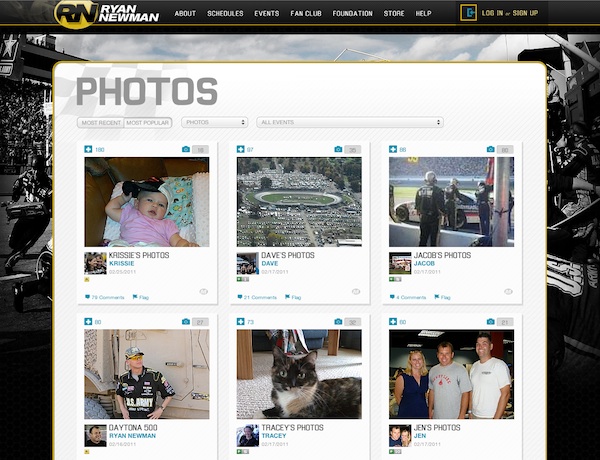
Platforms for racing in the 21st century.

Fame Foundry puts the racing experience in front of millions of fans, steering motorsports to the modern age.

“Fame Foundry created something never seen before, allowing members to interact in new ways and providing them a central location to call their own. It also provides more value to our sponsors than we have ever had before.”

—Ryan Newman

Technology on the track.

Providing more than just web software, our management systems enhance and reinforce a variety of services by different racing organizations which work to evolve the speed, efficiency, and safety measures, aiding their process from lab to checkered flag.

WorkWeb DesignRetail

Setting the pace across 44 states.

With over 1100 locations, thousands of products, and millions of transactions, Shoe Show creates a substantial retail footprint in shoe sales.

The sole of superior choice.

With over 1100 locations, thousands of products, and millions of transactions, Shoe Show creates a substantial retail footprint in shoe sales.

WorkWeb DesignRetail

The contemporary online pharmacy.

Medichest sets a new standard, bringing the boutique experience to the drug store.

Integrated & Automated Marketing System

All the extensive opportunities for public engagement are made easily definable and effortlessly automated.

Scheduled promotions, sales, and campaigns, all precisely targeted for specific demographics within the whole of the Medichest audience.

WorkWeb DesignSocial

Home Design & Decor Magazine offers readers superior content on designer home trends on any device.


  • By selectively curating the very best from their individual markets, each localized catalog comes to exhibit the trending, pertinent visual flavors specific to each region.


  • Beside the swaths of inspirational home photography spreads, Home Design & Decor provides exhaustive articles and advice by proven professionals in home design.


  • The art of home ingenuity always dances between the timeless and the experimental. The very best in these intersecting principles offer consistent sources of modern innovation.

WorkWeb DesignSocial

  • Post a need on behalf of yourself, a family member or your community group, whether you need volunteers or funds to support your cause.


  • Search by location, expertise and date, and connect with people in your very own community who need your time and talents.


  • Start your own Neighborhood or Group Page and create a virtual hub where you can connect and converse about the things that matter most to you.

June 2021
Noted By Joe Bauldoff

The Making and Maintenance of our Open Source Infrastructure

In this video, Nadia Eghbal, author of “Working in Public”, discusses the potential of open source developer communities, and looks for ways to reframe the significance of software stewardship in light of how the march of time constantly and inevitably works to pull these valuable resources back into entropy and obsolescence. Presented by the Long Now Foundation.
Watch on YouTube

239 The 5 types of brand evangelists: The Fame Seeker

Give The Fame Seeker their 15 minutes in the spotlight, and they'll give you their loyalty.

775 Boost email open rates by 152 percent

Use your customers’ behavior to your advantage.

774 Feelings are viral

Feelings are the key to fueling likes, comments and shares.

June 2012
By Jeremy Girard

Check Your Ego at the Door: Embracing User-Centered Website Design

When it comes to the design of your website, there's only one opinion that really matters, and it's not yours or your web designer's.
Read the article

Check Your Ego at the Door: Embracing User-Centered Website Design

user-center-article The creation of a new website is a process filled with important decisions. As the owner, CEO, or decision maker at the organization for which the new site is being designed and developed, you will be asked for your feedback or approval a number of times along the way – but what are you using as the basis for that feedback? Too often decisions are made during a website’s creation that are based on the preferences of the site’s “owners” and not on the needs of the people who will actually use the website. This is the wrong way to go about making decisions for a project, because the reality is that your website should not be designed for you, it should be designed for your audience. In this article, we will take a look at how you can shape the decisions you make on a website’s creation, or its subsequent upkeep, to help you meet the needs of your website’s most important audience - the clients and customers that will bring you business and ultimately make your site a success.

Making design decisions

No one wants to have a website they don’t like the look of, but the fact of the matter is that design decisions are not made for aesthetic reasons only. Visual choices for a project should be made by taking the needs of your audience, and your business’s goals for the website, into account. Many people assume that their website should be a reflection of their personal tastes or sense of style. That is not the case. It’s sometimes hard to hear, but your preferences of what looks good and what doesn’t should be secondary to what is appropriate for your site’s users. You certainly want something that you are proud of, but when reviewing design options, but sure to consistently ask yourself, “what would my audience think?” Or better yet, ask some of your actual users for their feedback and use that data in your decision making process. In the end, the goal is to come up with a design that you love and which properly represents your company, but will also meet the needs of your audience. When in doubt, however, defer to your users’ needs and remember that old saying – “the customer is always right.”

Give users what they want

While a great design is certainly important, the reality is that your customers are not coming to your website to be “wowed” by its visual design - they are coming to your site for its content. If you want your site to succeed, it has to offer the content your audience is looking for and make it easy for them to find it. When considering what content should be presented on the website, and also where it should be presented, you should once again ask yourself what is right for your audience. You may be very proud of the awards your company has won or feel that the “Message from the President” is insightful, but be truthful - is that what your site visitors are coming to find? If not, then does it make sense to present that content on your homepage or someplace else with similar prominence? Oftentimes website content is prioritized based on company egos or a sense of what they want to see, rather than what users are looking for. We are proud of our accomplishments, so we want them front and center for all to see. Our President runs the company, so his words must be important, right? While these may both be true, if your site visitors are not looking for this content, and yet you place them in a spot of prominence instead of content that your audience actually wants, then you are putting your needs or opinions ahead of theirs. Leave the ego aside when making content decisions for the website. Those awards announcements and presidential messages can certainly have a place on the site, just make sure it’s an appropriate place that doesn’t interfere with what your users come to the website to see.

I want my website to do something cool!

Website owners love pizzazz. We see another site that does something “cool” and we want something similar on our own site. Unfortunately, we rarely ever stop to consider whether that awesome animation or cool feature is actually effective or if it helps meet the goals of your site. When considering adding something you think is “awesome”, you should once again (I imagine you are starting to see a pattern here) ask yourself how that addition will help meet your business’s goals or your users’ needs. Does it help at all, or is it just something cool to add? Almost always, it is the later – nothing more than some “wow factor.” That alone would not be a bad thing, but too often, the “wow” that is added actually makes it harder for our users to do what they came to the website for in the first place. Take animated introductions or “welcome” videos on websites, features that are one of the more popular requests made to add some wow to a site. Would you ever start a business meeting with a song and dance number, trying to entertain your audience before the meeting begins? Probably not – yet that is exactly what you are doing when to you add that animated blast of pizzazz to your website. It is all show and no substance and your site visitors will see right through it – that is if they stick around long enough to even see it. Oftentimes, overblown effects such as unnecessary animation, videos, or music files that play when the site is loaded do the opposite of “wowing” your audience. Instead, those effects often drive them away. If you surprise site visitors with an audio track or a video that autoplays on page load, a likely response is to quickly click the ‘BACK’ button – taking the traffic you worked hard to get away from your website and your business. Your customers, and potential customers, come to your site for a reason. Anything that gets in the way of what they are looking to accomplish lowers the chance that they will continue deeper into your site to complete their task. When adding wow factor to make your site more memorable, always be sure that whatever you add is not done at the expense of your site’s usability. Furthermore, ask yourself if you really even need it, because a site that welcomes visitors and easily allows them to find the information they need to complete the task they came to complete is certainly doing “something cool” – it is meeting your users’ need and driving business results for you. Let’s take a minute to look at a few examples of wow factor added in appropriate, and inappropriate, ways so we can compare the two.

Video – the right way vs. the wrong way

We’ve already mentioned adding “welcome” videos to a website. Often, this video takes the form of a commercial or advertisement that a company ran on television. They receive a web- ready copy of the spot and, wanting to make the investment they made in that video stretch as far as possible, they decide to add it to the website. But for what purpose? If the goal of the initial commercial was to introduce viewers to your company and get them to the website, then why put it on the website to show users who are already there? The website for cosmetic dentist Gary D. Light & Associates starts with a video that pops up on the site and autoplays, distracting users from the rest of the site’s information. gary-light Even worse, if you’re in Internet Explorer – which many of your users will be, the video opens again on every single page you visit, even though you may have already closed it two or three times. That is a recipe for annoying your audience. The website for car dealership Tasca also begins with a video that autoplays, showing one of the company’s commercials. Visit the site for the first time and the video overtakes the screen with a commercial. It’s a bit jarring if you are not expecting it the video and audio to begin blaring out of your speakers. Overall, this is a quality website with lots of useful features for someone shopping for a vehicle. Does that opening video help in that search or does it drive you away when it pops up unexpectedly? A better way to present video is what you will see at the United Way of Rhode Island. United-Way-Rhode-Island Their annual “campaign video” is one of the feature pieces of content for the website, and it is presented directly on the homepage in the large billboard area. Rather than autoplay the video, however, a site visitor has to request to see it by clicking the large red “Watch” button. In this way, the video is made readily available to those who want to see it, without interrupting the user experience of those who do not.

The three questions

When new visitors come to your website, they will ask themselves a few questions, namely:
  1. Who is this company?
  2. What do they do?
  3. What do I do next?
Not only do users ask these questions, they do it quickly, in as little as 4-8 seconds once they visit the page. To successfully meet your users’ needs, you need to make sure the content you place in front of them helps answer these questions and directs their experience. The website for Bradford Soapworks is a nice looking site with quality information throughout, but the homepage opens with a letter from the company chairman. There is no mention of what the company actually does, no images of their products and no clear calls-to-action to answer the question of “what do I do next?” That message from the Chairman, however important to the company, does not seem to be in line with the needs of site visitors. Bradford In contrast, the website for The Savannah Soap Company does a great job of answering these 3 basic questions and the eye-catching visuals, presented in the site’s large billboard area, also include calls-to-action to “start learning” or to “learn more”, giving visitors a clear direction as to what to do next. savannah-soap When presenting content on your website, consider the answers to the 3 visitor questions outlined above and consistently ask yourself whether the placement of the content you are using is appropriate to meet your visitors’ needs and answer those questions.

Talk to your audience

If you truly want a site that will be a success, continually ask yourself what your customers would want as you make decisions on the site – both during initial design and development phases and again later on during the site’s maintenance. Or, as I mentioned earlier, take it a step further and don’t only ask yourself what your users would want – actually ask them! Whenever appropriate, ask real customers how you are doing on your website. Did the decisions you made along the way help them in the ways you intended? What else could you do to make their experience better? You will be amazed at the quality feedback you can get simply by asking a few questions. Now, this doesn’t mean you should simply put a “tell us how we are doing” form on your site and call it a day. The most likely submissions you will get through those forms are spam-bots or angry visitors who are more likely to fill out such a form when they are upset. While you certainly want to know if someone is upset with the site, this feedback form alone will give you a very skewed picture of how you are doing. Soliciting feedback from your site means truly interacting with your audience. Pick up the phone and call some customers to ask them your questions – or work with a firm that specializes in user testing and see how the site holds up in those tests. However you gather the data, the best way to meet your users’ needs is to learn what those needs are and the best way to learn what they are is to speak to your audience.

Love your website

A website is a reflection of our business, so it makes sense that we want it to also be a reflection of us – our likes and preferences. We want our website to be “ours” - but in the end, while the website itself may be yours, the experience it creates belongs to your audience. If you truly want to make the site a success, start by making sure that the experience it creates - from the design visuals, to the content presented, to the wow factor you decide to (or not to) add, is a wonderful experience for your users. Meet their needs and they will make your site a success. I don’t know about you, but to me, a site that does that is about as “cool” as it gets.
November 2015
By Jeremy Girard

Is Your Brand Ready to #OptOutside? How to Follow REI’s Bold Leap into Customer-Centric Marketing

Rather than trying to out-spend, out-market and out-advertise your competition, outsmart them by demonstrating to your customers that you're more in touch with their wants and needs.
Read the article

Is Your Brand Ready to #OptOutside? How to Follow REI’s Bold Leap into Customer-Centric Marketing

artice_optoutside-lg For many retailers, the day known as Black Friday has become one of the most important dates on their calendar. Last year, shoppers in the US spent just over $9 billion on the day after Thanksgiving, counting for a sizable percentage of many stores’ holiday sales. This is why it was so surprising when outdoor equipment retailer, REI, announced that they would be closing all 143 of their stores this Black Friday and encouraging their employees and customers to #OptOutside instead. It remains to be seen if this bold move on the part of REI will make a dent in the company’s sales over the entire holiday period or if they will make up the difference elsewhere. What we do already know is that the early reactions to this decision have been extremely positive and there are some valuable lessons to be learned from this campaign from REI.

Customer-centric marketing is still marketing.

Make no mistake about it, this decision by REI is marketing. They have an entire section of their website dedicated to this #OptOutside idea and they are encouraging others to join them and to “tell the world.” A company does not take these steps for a simple announcement of a change in store hours. You go to these lengths for a marketing campaign. The fact that this is a marketing campaign should in no way take away from what REI is doing with this idea. They are voluntarily skipping out on one of the biggest shopping days of the year in order to do something that will benefit their people. Not only are they losing out on the sales from that day, but they are paying their employees to head outside! So this day is costing the company in a number of ways. Yes, this is marketing, but that does not also mean it is not an amazing and honest decision by this company. Marketing does not need to be a shady or deceptive thing, it simply needs to shine a light on your company. If you can do that while also doing something positive, that is a win-win situation. optout

Stay true to your ideals.

The main reason why this campaign from REI is so perfect is because it is absolutely in line with the company’s overall ideals. This idea makes sense coming from REI in a way that it would not if it was being done by Wal-Mart. That is not a knock on Wal-Mart, it is just the simple truth that this kind of a campaign would not be on brand for that retailer, while it is for REI. When planning your own campaigns, remember to remain true to your company’s ideals and mission. No one likes marketing that feels disingenuous, so by being true to who you are, your efforts have a much better chance of being well received.

Make the hard decisions.

On-brand or not, this decision could not have been an easy one for REI to make. There is no way to deny the fact that they will lose sales by closing the store on Black Friday. Still, they made the hard choice to follow through with this initiative anyway. That is an important lesson. Doing something new and unexpected is rarely easy. Sometimes it can be really, really hard. If you have thought through your plan and decided that it is the right direction for your company, you will need to make that hard decision and press forward. Depending on the structure of your company, making hard choices may require buy in from multiple people. Have these discussions and evaluate all the angles, but in the end, do not allow a hard decision to prevent you from making the right decision.

Do the opposite of your competition.

REI’s decision to shut their doors on Black Friday is so surprising because it is the exact opposite of what other stores are doing. Other companies are expanding their hours of operation, with many of them opening on Thanksgiving to get a jump on the shopping frenzy. A company that stands up and decides to take the exact opposite approach of what everyone else is doing gets noticed. When planning your own marketing or promotional ideas, look to what your competitors are doing and think about how you could turn the entire situation on its head. Dare to be wildly different and take the opportunity to show the world how you are different from your competition and why that should matter to them. Taking a unique approach can be incredibly powerful, especially in the world of the Web where everyone seems to be playing a game of “monkey see, monkey do” and just rehashing the same old campaigns and approaches over and over. If you want to break that mold, you can start by moving in the opposite direction of everyone else.

Tell the world.

The best marketing idea in the world will fail if you do not share that idea with the world. You need to promote your campaign so it reaches your customers and potential customers. In the case of REI, they didn’t just put a small sign on the doors of their stores to let customers know about their Black Friday plans. They shot videos, made a website, and created a whole campaign around their #OptOutside hash tag. When planning your marketing campaigns, be sure that you couple a great idea with a strategy to communicate it effectively. REI has done this perfectly and the incredibly positive reception they have received from people fed up with the ridiculousness of Black Friday has helped propel this campaign even further. All the while, people are talking about REI in a powerful and positive light. Yes the company may lose some sales on Black Friday, but what they are gaining in terms of public perception and promotion is priceless!

Have a plan.

In addition to communicating what you are doing with the world, you should also have a plan to capitalize on the results. REI is not stupid, they know that the business will still come and I fully expect them to run sales the rest of that Black Friday weekend. People who appreciate what the company has done for their employees and customers may make it a point to shop with them that weekend as a show of support. In the end, the company may even make up those lost Black Friday sales that weekend or over the course of the holidays. This has to be part of their ultimate plan – to do something positive and different while also positioning it in such a way that they will be able to recover anything that may have been lost. It’s a great plan for all involved.

In summary

REI took a bold stand in their efforts to break away from what every other retailer is doing with their Black Friday promotions. Instead of fighting for attention on that crazy shopping day, they have decided to take a different route. Because they stayed true to their ideals, made some tough decisions, and were unafraid to shake things up and be different, they are the store that people are talking about leading up to Black Friday, which is interesting since they are the only ones who will be closed that day.